


Page 44 - Demo
P. 44
  WHEN MILTON FRIEDMAN’S ARTICLE ‘The Social
Responsibility of Business
Is to Increase Its Profits’ appeared in The New York Times on 30 September 1970, businesses around the world from small ventures
to large corporations, rejoiced. They were, after
all, in the throes of rising global competition, which was pushing them to increase turnover and profits, and to grow bigger and more powerful than their competitors, faster than ever.
To them, the theories of the American economist were more than appealing. First, they gave them ‘permission’ to do whatever they deemed necessary
to grow their financials, even if it went against prevailing and emerging social and environmental convictions. According to Friedman, only people, not businesses, could have social responsibilities. Corporations’ only social obligation, he wrote, was
to make money, as this would fuel the economy and benefit people in the form
of jobs and income. That
is how businesses would change the world, making it a better place. Ethical and social issues should be left for individuals and the government to take care of.
Friedman’s criticism of government regulations of the private sector was the cherry on top for many. He, after all, called for a system of laissez-faire economics. Meaning ‘allowing to do’ in French, this policy advocates for as little as possible government intervention in business and the economy.
Now that 50 plus years have elapsed, the question is, how relevant are his thoughts, ideas and visions?
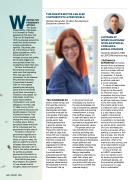
THE PRIVATE SECTOR CAN ALSO CONTRIBUTE TO A FREE WORLD
Vanessa Govender, Product Development Executive at Sweet-Orr
    ‘YES, BUSINESSES DO
exist to make money, and this fuels the economy, increases profits for shareholders and helps to provide more jobs for more people. Particularly the latter is an essential private-sector task. Creating employment
is good for people, but also for businesses. Those who work for you will, after all, align their focus with your corporate values while investing their time, energy and skills in helping your organisation to fulfil its mission and vision.
‘I, however, believe the private sector’s
duty goes beyond that. Businesses have a vital role to play in helping to create an ethical society and equitable economy. This shouldn’t be up
to the government and individuals only. Some of the ways businesses can help to achieve this, besides creating jobs and reducing unemployment, is to pay their staff fair wages, not
to use child labour, and to procure their goods and services from suppliers with the same business values.
‘The private sector can also contribute to a free world by providing safe
and comfortable working environments for the people they employ and developing social upliftment and responsibility programmes for people living in their immediate surroundings. Being a responsible company is what sets you apart from others, and being transparent about your actions will help your business to be better and exercise integrity.’
A HUMAN AT WORK IS A HUMAN WITH AN ETHICAL CODE AND A MORAL COMPASS
Jonathan Shapiro, CEO of LESCO Manufacturing
‘FRIEDMAN IS SEPARATING the human element from businesses by assuming a human at work is a human without emotions. This notion
is unrealistic. A human
at work is a human with an ethical code and
a moral compass.
‘In terms of responsible businesses being a
threat to the free world,
as Friedman says, I feel companies that only focus on profit and don’t follow an ethical code are a threat to the free world. While
the private sector’s role
is indeed to make a profit and create employment,
it is also there to help create a more ethical society and economy. It
is possible to incorporate social and environmental, as well as profit, elements into your business plan
and be successful. When starting a company in this day and age, you should first seek to answer two questions: what is the market you are serving, and what responsibility issues do you want to tackle?
‘In line with that, we
at LESCO understand who our market is and by employing physically challenged people, we have married profitability and purpose in a way that is sustainable.’
  42 | ISSUE 1 2021


