


Page 27 - Demo
P. 27
    that takes into account
an environment that is more Volatile, Uncertain, Complex and Ambiguous – VUCA – than ever. The old way is simply no more.
Is there anything then in existing corporate cultures that can be carried forward to become integral in this time? Yes, but it has to be taken up several notches. This includes a value system that puts all the inspirational, motivational quotes on the posters on your walls into practice, trust in your team and yourself, especially
now that pats on the back have been replaced by high-five emojis as we interact via screens; genuine care for employee well- being, greater diversity
and inclusion in the way we think, work and interact online; and courage to accept mistakes and
move forward.
Perhaps this is going to take a deconstruction of your organisational fibre
to determine what truly creates that brand fibre, and it starts with the type of leaders in an organisation.
THE BUILDING
BLOCKS WE NEED NOW In 2018, when the world had no inkling of what was going to come our way in
Leisha
Naidoo is an organisational development
strategist and the founder of Injabulo Learning and Development Solutions. Her areas of expertise are in graduate integration, performance management and building high- performing teams.
2020, the World Economic Forum published a report that outlined the skills that would be most relevant in the workplace by 2030. At the top of their list are high cognitive skills (advanced literacy, critical thinking
and complex information processing) followed by social and emotional skills (empathy, the ability to learn continuously and emotional resilience) and technological skills from basic to advanced. According to many, this last one, although third on the list, has shown the biggest proportional increase compared to
the previous decade.
How interesting, then, that
even in the midst of a global pandemic, these skills are more relevant than ever. If you had to be courageously candid, how would you rate on each? As leaders and employees, it is the sum of our parts that will create that integral fibre that upholds our organisational culture.
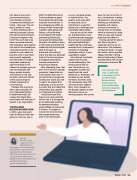
I would advocate that there is one more skill that will be vital. It is the age-old art of relationship building. As personal branding expert William Arruda wrote in Forbes: ‘It’s harder to connect on a human level with people when they exist in two dimensions
on your computer screen or mobile device. You
need to work extra hard
to make sure you’re interacting in a way that allows you to build genuine, meaningful relationships.’
How do we do this when our building blocks, such
as affirming body language, face-to-face conversation and (unscheduled) light- hearted banter, have been removed from the equation? Consider on-boarding employees online? Is your organisation ready?
Let’s attempt to critically analyse how to build
virtual relationships. The obvious pro is that we
won’t be limited by our geographic location but would have the world literally at our fingertips. Just because we can access someone, however, does not necessarily mean that we know how to relate to them. From stalwarts on
the Sandton skyline to tech start-ups in savvy co- working spaces, this comes
yourSPACE reputation down to trust. And trust, in
turn, comes down to being transparent in who you are, showing up consistently, likeability and making
a human connection. It comes down to credibility, which is achieved by doing what you say, and a social presence that affirms it.
Having said all the above, let’s take a minute to celebrate just how far we have come. The resilience we have all shown, not just as a nation, but as a global village, has been nothing short of astounding. Please consider that a very sincere virtual pat on the back. M
Turn to page 18 to read ‘Leadership is a matter of trust’ in which Thato Belang delves deeper into the trust relationship between employer and employee.
        ISSUE 1 2021 | 25
PHOTO: GALLO IMAGES/GETTYIMAGES


